Middle Lane Hogging Could Cost You Points

Introduction

Middle lane hogging…

Few motorway habits cause more frustration than a driver sitting unnecessarily in the middle lane.

You may approach safely from behind while travelling in the left lane.

Then comes the dilemma.

Should you cross two lanes to overtake them?

Or should you continue forward and pass on their left?

The second option may feel justified.

However, an unsafe undertaking manoeuvre could result in a fine, penalty points and higher Car Insurance costs.

This guide explains:

  • What middle lane hogging means
  • Why it disrupts motorway traffic
  • Whether undertaking is illegal
  • What penalties drivers could face
  • How penalty points may affect Cheap Car Insurance
  • How to respond safely without making the situation worse

Another driver may cause the frustration, but your reaction could leave you paying for it.

What Is Middle Lane Hogging?

Middle lane hogging happens when a driver remains in the middle lane without overtaking another vehicle.

Drivers should normally use the left lane when the road ahead remains clear.

The middle and outside lanes allow motorists to pass slower traffic.

After completing an overtake, drivers should return to the left when it becomes safe.

Simple enough.

Yet motorists ignore or misunderstand this rule every day.

Some drivers believe the middle lane feels safer.

Others avoid moving left because they expect to meet another slower vehicle eventually.

Meanwhile, distracted drivers may simply stop noticing that the left lane has become empty.

Whatever the reason, unnecessary middle lane driving can obstruct traffic and provoke risky reactions.

Drivers comparing car insurance options should remember that motoring offences can narrow their choices later.

Can Middle Lane Hoggers Receive Penalty Points?

Yes.

Police may treat persistent middle lane hogging as careless or inconsiderate driving.

A less serious offence could result in a fixed penalty and three licence points.

More serious cases may proceed to court.

Therefore, middle lane hogging is not merely irritating.

It can become a motoring offence.

But here is where things get complicated.

The driver attempting to pass the lane hogger could also land in trouble.

Why Does Middle Lane Hogging Cause Congestion?

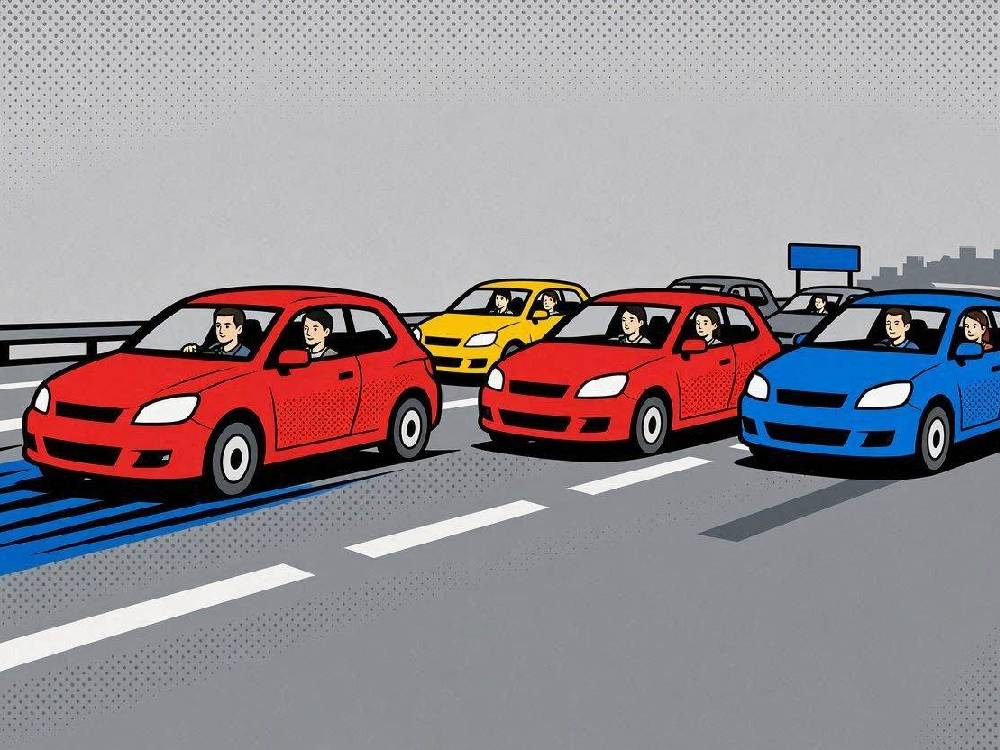
A middle lane hogger can make a three-lane motorway function more like a two-lane road.

Imagine that you are travelling in the left lane.

A slower vehicle sits ahead in the middle lane, despite the inside lane remaining clear.

To overtake conventionally, you must move into the middle lane.

Then you must move again into the outside lane.

After passing, you complete the same journey back towards the left.

One poorly positioned vehicle has forced several unnecessary lane changes.

And that changes everything.

Every lane change requires observation, signalling, judgement, and sufficient space.

Consequently, unnecessary lane changes create more opportunities for hesitation, blind-spot mistakes, and sudden braking.

Traffic also begins to bunch behind slower vehicles.

Meanwhile, faster motorists crowd into the outside lane.

As a result, the motorway carries traffic less efficiently.

The problem does not end there.

Middle lane hogging regularly provokes anger and impatience.

Drivers may begin tailgating.

Others flash their headlights or repeatedly sound the horn.

Some motorists accelerate beyond the speed limit.

Others remain in the left lane and undertake.

Unfortunately, a few seconds of frustration can create financial consequences lasting several years.

That can make finding very cheap car insurance considerably harder.

Is Undertaking A Middle Lane Hogger Illegal?

Many motorists assume that passing any vehicle on the left automatically counts as an illegal undertaking.

The reality carries more nuance.

The Highway Code advises drivers not to overtake on the left.

It also warns motorists against moving left specifically to pass another vehicle.

Therefore, deliberately changing into the inside lane, accelerating past, and moving right again could be viewed as careless driving.

Here is the crucial distinction.

During congestion, different lanes often travel at slightly different speeds.

In slow-moving queues, motorists may remain in their lane when it moves faster than traffic on the right.

Keeping pace with congested traffic differs from deliberately changing lanes to undertake.

Speed matters.

Road conditions matter.

Your distance from other vehicles matters too.

Above all, police will consider whether the manoeuvre created unnecessary danger.

What If You Are Already In The Left Lane?

This situation causes the greatest confusion.

You may already be travelling correctly in the left lane when you approach a slower middle lane driver.

May not have moved left to undertake them.

You are simply catching up.

So, what should you actually do?

Continuing past at motorway speed may still carry legal risk outside congested conditions.

The safest response usually involves completing a conventional overtake on the right.

Check your mirrors.

Assess the traffic around you.

Then move across one lane at a time when suitable gaps appear.

After passing, return to the left when it becomes safe.

Yes, this can feel unfair.

You are following the rules while the middle lane hogger is not.

Nevertheless, another driver’s mistake does not excuse careless driving.

Two wrongs will not protect your licence.

What Penalties Could Undertaking Carry?

Undertaking does not attract one automatic penalty in every situation.

Instead, the consequences depend on the manner of driving.

Police may deal with an unsafe pass as careless or inconsiderate driving.

A less serious offence could bring a £100 fine and three penalty points.

However, aggressive lane changes, excessive speed, or dangerous passing may lead to court proceedings and heavier penalties.

This is the part many drivers overlook.

Penalty points may also increase future insurance premiums.

Insurers consider motoring convictions when assessing the likelihood of a future claim.

Consequently, drivers with points may receive fewer competitive quotations.

They may also struggle to secure the cheapest car insurance available before the offence.

That makes one impatient decision surprisingly expensive.

Drivers should always disclose relevant convictions when comparing cheap car insurance.

Failing to answer an insurer’s questions accurately could create serious problems during a later claim.

Motorists facing a higher renewal price can also explore five ways to save money on car insurance.

However, prevention remains cheaper than repairing the damage afterwards.

And the financial impact may last much longer than the original journey.

A conviction could influence several renewals before it stops affecting quotations.

Therefore, staying calm may protect both your licence and your bank balance.

Drivers unhappy with their renewal price should compare alternatives before they switch car insurance.

How Should You Respond To A Middle Lane Hogger?

The safest response is simple.

Stay calm and complete a conventional overtake on the right when traffic conditions allow.

Check your mirrors carefully.

Signal before changing lanes.

Then move across one lane at a time, rather than cutting sharply through traffic.

Once you have passed the slower vehicle, return to the left when it becomes safe.

Here is what matters most.

Another driver’s poor lane discipline does not excuse dangerous behaviour from you.

Avoid tailgating, speeding, or repeatedly flashing your headlights.

Likewise, never brake-check another vehicle or use the hard shoulder to pass.

These reactions can quickly turn a frustrating situation into a serious collision.

They may also leave you facing penalty points, a fine, or an insurance claim.

Could Points Increase Your Car Insurance?

Penalty points can affect the price of Car Insurance because insurers use driving history when assessing risk.

However, the increase will vary between providers.

Some insurers may charge more.

Others may apply a larger excess or offer fewer policy options.

Therefore, comparing quotations becomes especially important after a motoring conviction.

Always answer questions about points and convictions honestly.

Providing incomplete information may produce a cheaper initial quotation, but it could cause problems during a later claim.

Cheap today can become expensive tomorrow.

Drivers looking for alternative cover may want to explore telematics car insurance.

A telematics policy may reward careful driving, although savings are never guaranteed.

You should also compare the actual cover provided, rather than choosing the lowest number on the screen.

Our guide to comprehensive versus third-party insurance explains the main differences.

Conclusion

Middle lane hogging is frustrating because it disrupts traffic and forces other motorists to make unnecessary lane changes.

However, undertaking aggressively may create an even greater problem.

A moment of impatience could lead to points, a fine, and higher Car Insurance premiums.

Do not let a few seconds of frustration become years of extra expense.

Keep a safe distance.

Overtake on the right when conditions allow.

Then return to the left once you have safely passed.

The middle lane hogger may be driving badly.

Nevertheless, protecting your licence, your passengers, and your ability to find Cheap Car Insurance matters far more than proving a point.
Ambulance Red light Rules? The £1,000 Fine UK Drivers Must Avoid

Introduction

Ambulance red light rules..

Flashing blue lights appear behind you, so you move quickly—but one well-intentioned mistake could mean three penalty points and a fine.

In this guide, we explain:

  • What to do when an ambulance approaches
  • Whether you can cross a red light
  • Where and when you should pull over
  • Which dangerous reactions drivers must avoid
  • How a traffic offence could affect your car insurance
  • Why staying calm may protect both your licence and your wallet

What Should You Do When An Ambulance Approaches?

Most drivers instinctively want to clear the road as quickly as possible.

That reaction makes sense.

However, speed is not the priority.

Safety is.

Highway Code Rule 219 tells drivers to consider the emergency vehicle’s route and take appropriate action while obeying traffic signs. (GOV.UK)

In other words, you should help the ambulance pass without creating another dangerous situation.

Ambulance Red Light Rules: Here Is The Crucial Point

The ambulance driver needs you to act predictably, not dramatically.

First, check your mirrors and assess the road ahead.

Then, look for somewhere safe to pull over without blocking a junction, bend or narrow section.

Signal clearly before changing your position.

Afterwards, slow down gradually and leave enough space for the emergency vehicle to pass.

Avoid braking sharply.

A driver behind you may not have seen the ambulance yet.

Likewise, do not stop in the middle of the road unless traffic conditions leave no safer alternative.

You could block the ambulance rather than help it.

And there is another risk

Some drivers panic and mount the kerb.

However, doing so could endanger pedestrians, damage the vehicle or cause a collision.

The Highway Code specifically advises drivers not to endanger themselves, pedestrians or other road users when making space.

Therefore, stay controlled and keep observing your surroundings.

Finding cheap car insurance matters, but protecting your driving record matters too.

One rushed decision can carry consequences long after the ambulance has passed.

Ambulance Red Light Rules: Can You Go Through A Red Light For An Ambulance?

No.

You should not cross the solid white stop line while the traffic signal remains red.

This rule still applies when an ambulance, police car or fire engine waits behind you.

Blue Light Aware advises the first driver in a queue to remain where they are and let the emergency vehicle find another route. That May Feel Completely Wrong

You can hear the siren.

Can see the flashing lights.

You may even feel pressure to move.

Nevertheless, crossing the line could place you directly in the path of pedestrians or traffic entering from another direction.

The emergency driver understands this.

Emergency crews receive specialist training and can use legal exemptions that ordinary motorists cannot use.

Therefore, let the crew decide how to navigate the junction.

Do not enter the junction, edge across the line or move into crossing traffic.

The only clear exception arises when a uniformed police officer directs you to move.

Drivers must follow lawful directions from police officers controlling traffic.

What happens If You Go Through A Red Light For An Ambulance?

Failing to comply with traffic-light signals carries three penalty points.

A court can also impose a maximum fine of £1,000 and may consider disqualification. (GOV.UK)

That does not mean every driver will automatically receive a £1,000 bill.

However, the potential penalty remains serious.

A camera records your vehicle crossing the line.

It does not automatically know that an ambulance was behind you.

Furthermore, points on your licence may affect future car insurance options.

Insurers calculate premiums using numerous risk factors, including driving history and motoring convictions.

Consequently, a moment of panic could make finding the cheapest car insurance more difficult later.

What If The Ambulance Remains Directly Behind You?

Stay calm and remain predictable.

Do not assume that a sounding siren gives you permission to break road rules.

This is where many drivers make the mistake.

They focus entirely on the ambulance and stop watching pedestrians, cyclists and surrounding traffic.

Instead, keep checking every direction.

If the lights change to green, move forward carefully and create space as soon as conditions allow.

If they remain red, stay behind the stop line.

The ambulance may use another lane, move around the traffic or wait until the junction becomes safe.

Although the delay may feel uncomfortable, an unsafe manoeuvre could waste more time.

Worse still, it could cause another emergency.

Drivers searching for very cheap car insurance should remember that avoiding offences remains one of the simplest ways to protect their record.

Ultimately, helping an ambulance does not mean moving at any cost.

It means responding safely, legally and without panic.

**H2 Conclusion

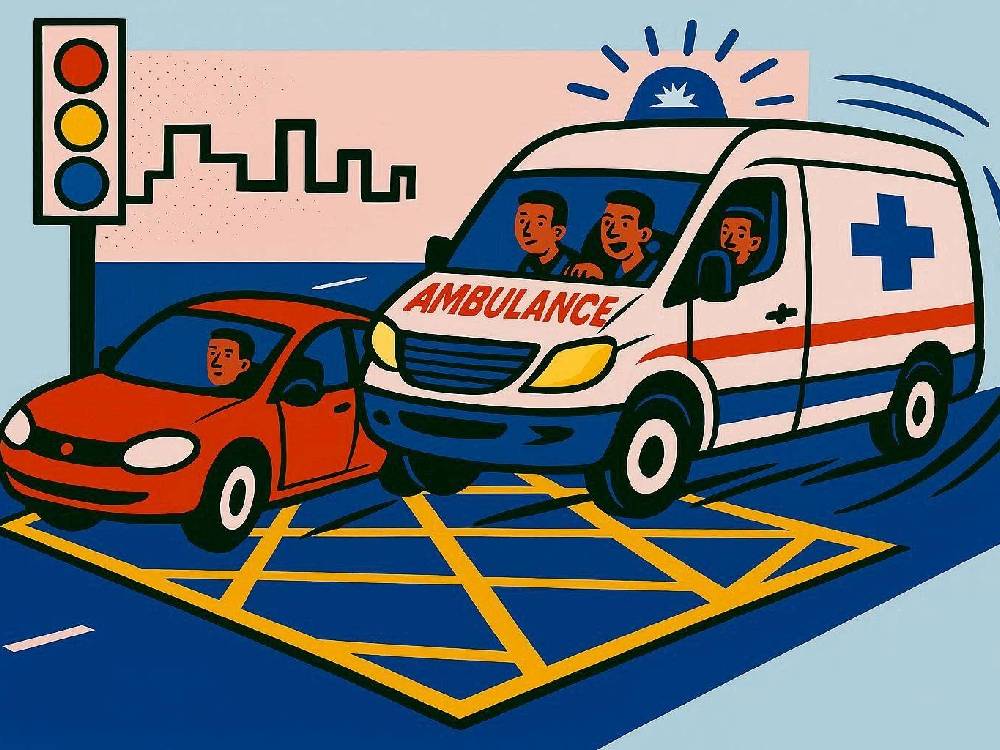
Can You Go Through A Red Light For An Ambulance At A Junction Box?

An approaching ambulance does not cancel yellow box junction rules.

You should only enter when your exit is clear.

Otherwise, you may become trapped inside the box.

And that creates a bigger problem.

Instead of helping the ambulance, you could block its route completely.

The usual right-turn exception still applies.

However, you must only wait when oncoming traffic or another right-turning vehicle prevents you from completing the turn.

Do not follow the vehicle ahead without checking the available space.

Likewise, never enter simply because another driver behind you starts sounding their horn.

Their impatience will not protect you from a penalty.

Can You Use A Bus Lane Or Mount The Kerb?

Drivers sometimes move into a bus lane when blue lights appear behind them.

However, you should not enter a restricted lane unless the signs allow your vehicle to use it.

Bus lanes often contain cameras.

Therefore, entering one at the wrong time could result in a Penalty Charge Notice.

But that is not the only danger.

Cyclists, motorcyclists and buses may already be using the lane.

A sudden movement could cause a serious collision.

Mounting the kerb creates similar risks.

Pedestrians may not expect a car to move onto the pavement, even during an emergency.

Stay on the road and move aside only when it is safe.

A calm response protects everyone.

Ambulance Red Light Rules: How Much Could The Mistake Cost?

The penalty depends on the rule you break.

Crossing a red light can lead to three penalty points and a fine.

A court may impose a maximum fine of £1,000.

Yellow box and bus lane offences usually involve council-issued penalties instead.

However, charges vary between local authorities.

More serious manoeuvres could also lead to allegations of careless or dangerous driving.

Here is why that matters.

The immediate fine may not represent the full cost.

Penalty points and motoring convictions can also influence future car insurance prices.

Insurers consider your driving history when assessing risk.

Consequently, a rushed decision could make finding cheap insurance in the UK more difficult.

You must also answer your insurer’s questions honestly.

Failing to declare requested information could create problems later, particularly when making a claim.

What Do Silent Blue Lights Mean?

An ambulance may sometimes display blue lights without using its siren.

That does not necessarily mean the emergency has ended.

The crew may reduce noise near vulnerable road users, during quieter hours or when traffic cannot safely move.

Therefore, continue watching the vehicle.

Do not make a sudden manoeuvre simply because the siren stops.

The safest approach remains the same.

Stay alert, remain predictable and create space when conditions allow.

Five steps to remember

  1. Stay calm and check your mirrors.
  2. Identify where the emergency vehicle needs to go.
  3. Signal before changing speed or position.
  4. Obey red lights, road markings and restricted lanes.
  5. Move aside only when it is safe and legal.

Frequently asked questions

Do I legally have to move for an ambulance?

You should take appropriate action to help it pass while continuing to follow traffic laws.

Can you go through a red light for an ambulance?

No.

Remain behind the stop line unless a uniformed police officer directs you to move.

Will penalty points increase my insurance?

They may.

The effect depends on the offence, your driving history and the insurer’s pricing rules.

Comparing providers may help you find the cheapest car insurance available for your circumstances.

Conclusion

Stay calm and protect your licence.

Most drivers want to help emergency crews reach their destination quickly.

However, panic can turn good intentions into an expensive mistake.

Do not cross a red light, enter a blocked junction or endanger pedestrians.

Instead, stay calm and let the emergency driver choose the safest route.

One careful decision could protect your licence, your insurance premium and everyone around you.

Driver Fined Again Paying Parking Ticket Using A Mobile Phone While Driving

Introduction

Using a mobile phone while driving is a no-no!

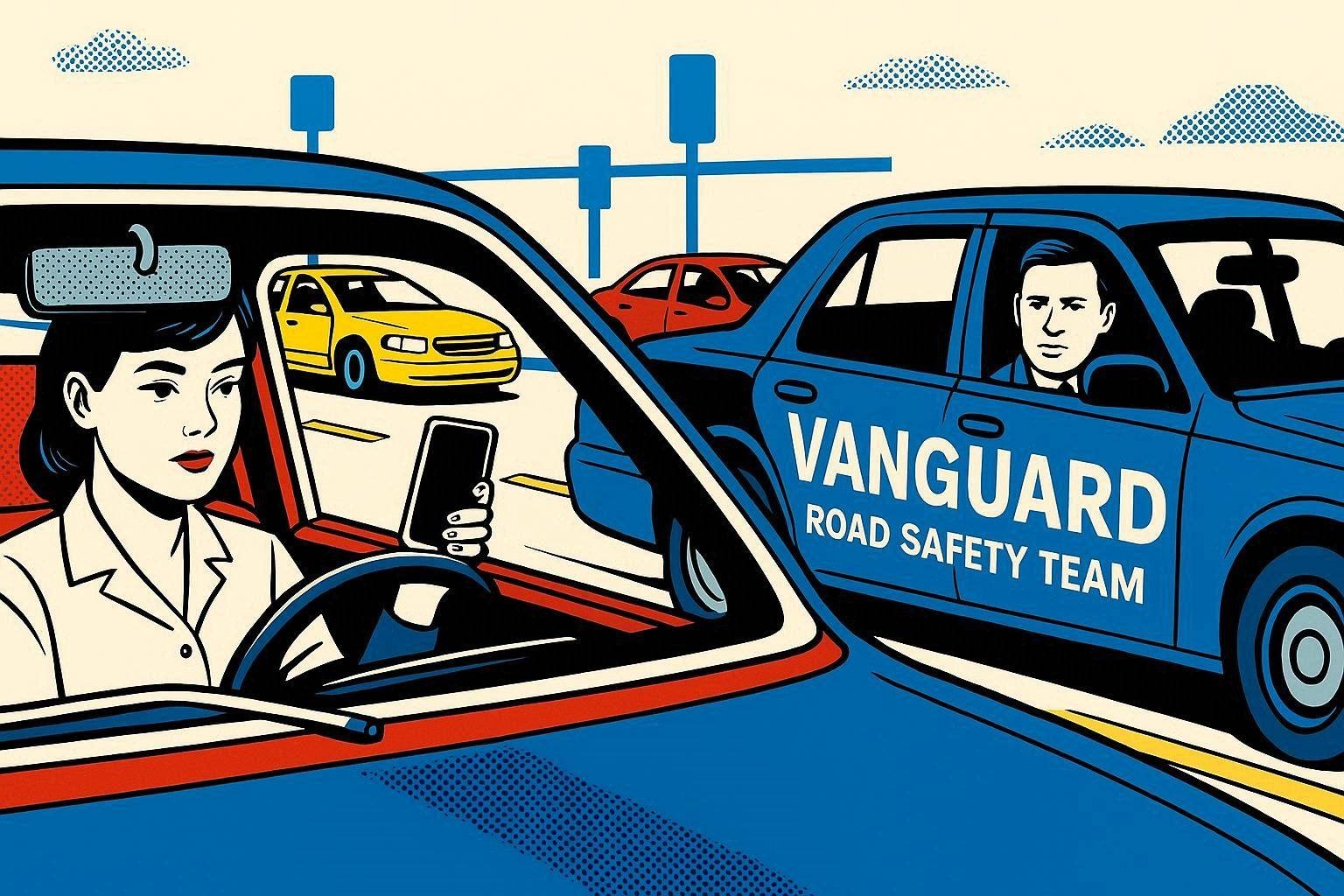
A Guildford driver reportedly received a £200 fine and six penalty points while using her phone to pay an earlier parking penalty.

The timing could hardly have been worse.

She was sitting in stationary traffic when an unmarked police vehicle pulled alongside her.

Moments later, she realised officers had seen the phone in her hand.

The incident offers a clear warning for UK motorists.

Being stuck in traffic does not usually make handheld phone use legal.

A brief mistake can also affect your licence, your finances and potentially your future Car Insurance.

Using A Mobile Phone While Driving To Pay A Fine Costs Driver £200

The incident took place in Guildford, Surrey.

Footage shared by Surrey Roadsafe showed the woman using her phone behind the wheel.

However, she was not reportedly making a casual call.

Instead, she appeared to be paying a parking fine.

That detail makes the story memorable.

It does not make the phone use lawful.

At the time, her vehicle was sitting in stationary traffic.

She may therefore have believed that handling the device carried little risk.

Then an unmarked Vanguard Road Safety Team vehicle pulled alongside her.

The specialist unit operates within Surrey Police.

Officers could reportedly see the phone in her hand.

The woman then looked across and appeared to realise who was watching.

That was when the situation changed.

She was issued with a Traffic Offence Report.

The outcome was another £200 fine and six penalty points.

In other words, paying one penalty helped create a second, more serious problem.

A payment can wait. Six penalty points may follow you for years.

Why Stationary Traffic Still Counts As Driving

Here is the crucial point.

A car does not need to be moving for the handheld phone rules to apply.

Drivers can still commit an offence by using a mobile phone while waiting at traffic lights.

The same applies when queuing in congestion.

Therefore, saying “I was not moving” does not automatically provide a defence.

Many drivers misunderstand this rule.

They see a red light or traffic jam as a safe opportunity to check their screen.

After all, the wheels have stopped.

The journey, however, has not ended.

You remain responsible for the vehicle while waiting for traffic to move.

Your attention should stay on nearby cars, pedestrians, cyclists and changing road conditions.

A queue can also begin moving without warning.

That is why the safest rule remains simple.

Wait until you have parked properly before handling the phone.

What Counts As Handheld Phone Use?

This is where many motorists get caught out.

The offence is not limited to calls or text messages.

It can also cover:

  1. Opening an app
  2. Checking social media
  3. Taking photographs
  4. Choosing music
  5. Entering navigation details
  6. Making an online payment

Therefore, paying for parking is not automatically treated differently from using another app.

The purpose may feel sensible.

The method remains the problem.

One quick tap can easily become several.

Then a message appears.

Next, the driver looks down for longer than intended.

That is how a small distraction grows.

Are There Any Exceptions To Using A Mobile Phone While Driving?

Yes, but the exceptions are narrow.

Drivers may use a handheld phone to call 999 or 112 during a genuine emergency when stopping is unsafe.

Certain contactless payments may also be allowed while the vehicle remains stationary.

For example, this may apply at a drive-through or toll terminal.

However, it does not provide general permission to browse a parking app in traffic.

Remote parking functions can also fall within a specific exception.

Again, that does not allow unrelated phone use behind the wheel.

So, here is the safest approach.

Unless a clear exception applies, put the phone down until you have parked.

What Is The Penalty For Using A Mobile Phone While Driving?

The standard penalty for illegal handheld phone use is £200 and six penalty points.

That is a serious punishment for a few seconds of distraction.

However, the fine may not be the largest long-term cost.

The points can remain relevant when drivers apply for future insurance.

They can also create immediate problems for newly qualified motorists.

Why Six Points Matter For New Drivers

Here is where the situation becomes even more serious.

Drivers who receive six points within two years of passing their test can have their licence revoked.

One mobile phone offence may therefore be enough.

The driver may need to apply for another provisional licence.

They may also need to retake both driving tests.

That means more lessons, more fees and more disruption.

For many young motorists, losing a licence can also affect work or education.

And then there is insurance.

New drivers already tend to face higher prices.

A mobile phone conviction can make finding cheap car insurance for young drivers even more difficult.

That is a considerable price for a task that could have waited.

How Can Penalty Points Affect Car Insurance?

Insurers consider driving convictions when calculating risk.

Therefore, six points may increase the price of your next policy.

The exact increase will vary.

Your age, vehicle, location and claims history will still matter.

Even so, some insurers may offer fewer options after a conviction.

Others may charge a higher premium or excess.

This is why drivers should never assume their renewal remains competitive.

Instead, compare several car insurance options before accepting a price.

The difference between insurers can become larger after penalty points.

And this matters.

The cheapest policy before a conviction may not remain the cheapest afterwards.

Do You Need To Tell Your Insurer?

Drivers should check their policy documents carefully.

Some insurers require notification during the policy term.

Others ask about convictions when the policy renews.

Either way, you must answer every question honestly.

Failing to disclose relevant information could create problems later.

For example, an insurer may investigate when you make a claim.

Incorrect details can also affect whether cover remains valid.

So, do not hide the offence to obtain a lower quote.

That is not genuine very cheap car insurance.

It is a risk that could become far more expensive.

Can You Still Find Cheaper Cover With Points?

Yes, although you may need to search more carefully.

Start by comparing quotes from several providers.

Next, check that every conviction detail is accurate.

Then review the parts of the policy you can control.

For example:

  • Choose a car from a lower insurance group
  • Review your annual mileage honestly
  • Improve the vehicle’s security
  • Avoid unnecessary optional extras
  • Consider a higher voluntary excess you can genuinely afford
  • Compare quotes before your renewal date

These steps will not erase the conviction.

However, they may help reduce the overall cost.

You can also read our guide to five ways to save money on car insurance.

The important thing is to compare like-for-like cover.

A lower price is not useful when the policy removes protection you actually need.

How Should Drivers Pay For Parking Safely?

The safest option is simple.

Park properly before using the phone.

Do not complete a payment while waiting at traffic lights.

Do not hold the device while sitting in congestion.

Instead, finish the payment before beginning the journey.

Alternatively, ask a passenger to use the app.

If necessary, pull over somewhere legal and safe.

A parking payment may feel urgent.

Usually, it can wait for a few minutes.

Six penalty points are much harder to undo.

Using A Mobile Phone While Driving: What Should Drivers Learn From This Case?

The Guildford incident highlights a common misunderstanding.

Stationary traffic does not normally make handheld phone use legal.

The reason for using the phone does not automatically matter either.

Paying a penalty may sound responsible.

Yet the driver still handled the device behind the wheel.

That single decision reportedly created another fine and six points.

It may also affect the cost of her future insurance.

Here is the real lesson.

A phone task can wait.

Your licence may depend on it.

Conclusion

The driver in Guildford reportedly tried to settle one penalty and received another.

Unfortunately, the second offence carried far more serious consequences.

A £200 fine hurts immediately.

Six penalty points can create problems for years.

They may threaten a new driver’s licence.

They may also make the cheapest car insurance harder to find.

So, resist the temptation to use your phone in stationary traffic.

Wait until you have parked safely.

Then make the payment, send the message or change the route.

A few minutes of patience could protect your licence and your wallet.

For related guidance, read our articles on:

mobile phone offences and losing your licence,

driving convictions and insurance and

what can invalidate car insurance.

Car Insurance And Road Signs: ‘Red And Blue Cross’ Sign Every UK Driver Needs To Understand

Introduction

Car Insurance And Road Signs

Most drivers think they understand UK road signs reasonably well.

However, one incredibly common sign still causes massive confusion.

And unfortunately, getting it wrong could cost you far more than expected.

Because although the sign looks familiar, many motorists still misunderstand what it actually means.

That’s the dangerous part.

Especially now.

Because fines and penalty notices can quietly increase Car Insurance costs over time.

Meanwhile, drivers searching for Cheap Car Insurance or Very Cheap Car Insurance deals may suddenly face higher premiums after avoidable driving offences.

So, understanding this sign properly matters.

Probably more than you think.

Drivers comparing quotes through Cheap Car Insurance should pay especially close attention.

In This Article

  • What the red-and-blue cross sign really means
  • Why thousands of drivers misunderstand it
  • The difference between clearways and urban clearways
  • Why stopping briefly could still trigger fines
  • How driving penalties may affect Car Insurance
  • Why insurers monitor driving behaviour closely

Car Insurance And Road Signs: Why So Many Drivers Get This Sign Wrong

The UK Highway Code contains hundreds of road signs.

Naturally, confusion happens.

Especially when signs look almost identical.

And this particular sign causes problems constantly.

You have almost certainly seen it before.

Yet many drivers still cannot explain its meaning correctly.

That creates risk immediately.

Because drivers often rely on assumptions.

Unfortunately, assumptions behind the wheel become expensive very quickly.

According to the AA, many motorists admit they struggle with parts of the Highway Code.

Meanwhile, social media discussions regularly reveal confusion around common road signs.

Here’s the problem.

Confidence does not equal understanding.

And insurers care about outcomes.

Not intentions.

Therefore, even small mistakes may eventually affect Cheap Insurance UK prices.

Particularly for drivers already trying to secure the Cheapest car insurance possible.

Drivers researching Very Cheap Car Insurance often overlook how minor penalties influence future premiums.

However, insurers rarely ignore repeated offences.

What Does The Red-And-Blue Cross Sign Mean?

Very simply:

It means no stopping.

At all.

The sign indicates a clearway.

And unlike some parking restrictions, clearways usually operate continuously.

That means drivers cannot stop:

  • to answer a phone call
  • to check directions
  • to drop off passengers
  • to wait briefly
  • or to pick somebody up

Even short stops can trigger penalties.

That surprises many drivers.

Particularly because there are often no road markings nearby.

Instead, the sign itself carries the restriction.

“The red cross means no stopping, not even to pick up or set down passengers.”

That wording catches motorists out constantly.

Especially on unfamiliar roads.

Or busy routes entering cities.

And unfortunately, confusion becomes expensive quickly.

Because fines may eventually influence Car Insurance prices.

That matters enormously today.

Especially with Cheap Car Insurance becoming harder to find across the UK.

Drivers trying to Avoid Fines should understand clearway rules properly.

Because insurers increasingly analyse driving behaviour carefully.

Drivers Can Still Be Fined For “Stopping Briefly”

This is where many motorists get caught out.

They assume stopping means parking.

Legally, it does not.

Even pausing temporarily may break clearway rules.

For example:

  • checking sat nav directions
  • making a phone call
  • dropping somebody off
  • waiting inside the vehicle
  • stopping outside a shop

All of these may lead to enforcement action.

And many drivers genuinely do not realise it.

That confusion partly exists because UK road signs look very similar visually.

Some restrictions allow stopping during certain hours.

Others ban stopping completely.

So naturally, drivers become confused.

However, enforcement officers rarely accept confusion as an excuse.

That’s why understanding these signs matters so much.

Particularly for drivers trying to maintain lower Car Insurance costs.

Because insurers monitor driving history carefully.

And repeated offences increase perceived risk.

Drivers looking to Switch Car Insurance often discover that previous penalties continue affecting quotes for years.

That’s the frustrating reality.

Clearway Vs Urban Clearway: The Difference Many Drivers Miss

Now here’s where things become even more confusing.

A clearway and an urban clearway look extremely similar.

However, legally, they work differently.

And that distinction matters enormously.

A standard clearway normally bans stopping entirely.

Meanwhile, urban clearways often apply only during certain times.

Additional signs usually explain those restrictions.

Unfortunately, many drivers never notice the extra details.

Instead, they assume the rules are identical.

That mistake can become expensive fast.

Especially when cameras or enforcement officers are nearby.

Drivers frequently believe they stopped legally.

Yet legally, they may already be breaking the rules.

Consequently, fines arrive unexpectedly.

And unfortunately, repeated penalties may gradually increase Cheap Insurance UK prices.

That becomes particularly difficult for younger drivers already facing expensive premiums.

Drivers exploring Young Driver Insurance Tips should understand that avoiding unnecessary penalties remains one of the easiest ways to reduce long-term insurance costs.

How Road Sign Mistakes Could Affect Your Car Insurance

Many motorists separate road signs from insurance completely.

However, insurers do not think that way.

Every driving offence builds a picture.

And insurers study that picture carefully.

Here’s the catch.

Even smaller penalties may increase perceived risk.

Especially when offences begin stacking up.

Consequently, drivers may suddenly pay more for Car Insurance.

That becomes incredibly frustrating.

Particularly for motorists already hunting for the Cheapest car insurance deals available.

Because premiums across the UK remain stubbornly high.

Meanwhile, insurers increasingly use automated risk systems.

Those systems analyse:

  • driving history
  • previous claims
  • endorsements
  • convictions
  • penalty notices

And patterns matter enormously.

Drivers with repeated infringements often appear statistically riskier.

As a result, securing Very Cheap Car Insurance may become harder over time.

Drivers comparing policies through How Insurers Calculate Insurance Prices are often surprised by how many factors influence quotes.

And driving behaviour remains one of the biggest.

Why Clearways Exist In The First Place

Clearways exist for one simple reason.

Traffic flow.

Stopping vehicles creates danger quickly.

Particularly on busy roads.

Or fast-moving routes.

Or congested urban areas.

One stopped vehicle can suddenly trigger:

  • sharp braking
  • bottlenecks
  • lane changes
  • rear-end collisions
  • unnecessary congestion

Therefore, authorities use clearways to keep traffic moving safely.

Especially near city centres and high-traffic roads.

And although the rules sometimes feel strict, they exist to reduce risk overall.

That’s important to remember.

Because safer roads ultimately benefit everyone.

Including drivers searching for Cheap Car Insurance across the UK.

Drivers reading How 20mph Speed Limits Affect Drivers Across The UK will notice a similar pattern.

Road rules increasingly focus on reducing accidents and improving traffic safety.

Conclusion: Car Insurance And Road Signs

The red-and-blue cross sign may look simple.

However, misunderstanding it could become expensive surprisingly quickly.

Because clearway rules ban stopping completely.

Even briefly.

And unfortunately, many UK drivers still confuse clearways with urban clearways.

That confusion creates unnecessary fines.

Potential penalties.

And possibly higher Car Insurance costs later on.

So before your next journey, it may be worth refreshing your Highway Code knowledge properly.

Because avoiding even small driving mistakes could help protect your future premiums.

Especially if you are searching for Cheap Insurance UK deals or the Cheapest car insurance possible.

Drivers looking to lower long-term costs should also read:

What Will Invalidate Your Car Insurance

Car Insurance And Speed Cameras Explained, and

The Hidden Risks That Could Affect Your Insurance for more important driving insights.

Car Insurance Warning: Young Drivers Risk £12,000 Loss Over One Illegal Habit

Introduction

Car Insurance warning – costs are rising.

And for young drivers, one illegal habit is quietly making Cheap Car Insurance almost impossible to secure.

A new UK survey shows phone use behind the wheel is not just dangerous.

It carries long-term financial consequences many drivers never see coming.

Here’s the reality.

  • Over two in five young drivers admit to illegal phone use while driving.
  • Insurers treat mobile phone offences as high-risk behaviour.
  • Penalties go far beyond fines and points.
  • Car Insurance premiums can soar for years.
  • The true cost can reach £12,000.

The Survey That Exposed A Growing Car Insurance Risk

A new poll commissioned by IAM RoadSmart surveyed more than 2,000 UK motorists.

The results were uncomfortable.

Especially for drivers aged 17 to 24.

43 per cent admitted to reading or sending messages while driving in the past year.

That figure drops sharply with age.

Drivers aged 35 to 44 reported a 29 per cent rate.

Those aged 45 to 54 fell to just 10 per cent.

That gap matters.

Insurers notice behavioural patterns like this.

And they price risk accordingly.

Want context on how insurers assess different behaviours.

Take a look at our guide to how premiums are calculated.
https://www.cheapcarinsurance.co.uk/how-do-insurance…culate-insurance/

Why Young Drivers Are Being Hit Hardest

Young drivers already sit in the highest risk category for Car Insurance.

Add illegal phone use.

And premiums jump again.

This is not about judgement.

It is about probability.

Insurers use data.

And the data shows distracted driving increases claims.

Here’s the problem.

Many young motorists see phone use as harmless multitasking.

Insurers see it as a warning sign.

That distinction changes everything.

Car Insurance Warning: Age, Risk, And Insurance Modelling

Car Insurance pricing relies on predictive modelling.

Age plays a central role.

Drivers under 25 already pay more for Cheap Insurance UK.

Illegal phone use amplifies that risk score.

One conviction can undo years of careful driving.

And unlike minor speeding, mobile phone offences carry a stronger behavioural signal.

Insurers assume repetition.

Habitual Use Behind The Wheel

The survey revealed something more worrying.

One in six young drivers admitted to instant messaging during at least half of their journeys.

That is not a lapse.

That is a habit.

Insurers do not price one-off mistakes lightly.

They price patterns harshly.

This is where Cheapest car insurance slips out of reach.

The penalties are clear.

And they are severe.

Since March 2017, illegal phone use carries:

  1. A £200 fine
  2. Six penalty points
  3. Immediate licence risk for new drivers

Lose your licence early.

And your Car Insurance profile collapses.

“A troubling number of young people are dicing with death and putting themselves at huge financial risk.”

That risk does not reset quickly.

The £12,000 Cost Nobody Explains

IAM RoadSmart analysed the wider impact of mobile phone convictions.

The result shocked many drivers.

Legal costs.

Insurance hikes.

Re-tests.

Commuting disruption.

Together, they can total £12,000.

Not immediately.

But over time.

This is where Very cheap car insurance disappears.

Silently.

If you are trying to reduce premiums instead, this guide explains safer strategies.
https://www.cheapcarinsurance.co.uk/5-ways-to-save-money/

Why Insurers React So Strongly

Mobile phone use signals distraction.

Distraction signals higher claim frequency.

And higher claims increase costs across the pool.

That is why insurers respond aggressively.

Some policies are repriced.

Others are cancelled.

And cancellation is worse than a price increase.

If you are unsure how insurers differ, this breakdown explains broker versus direct policies.
https://www.cheapcarinsurance.co.uk/what-are-the-dis…nsurance-brokers/

The Behaviour That Breaks Cheap Car Insurance

Recording videos.

Taking photos.

Messaging at traffic lights.

All of it is illegal.

A loophole once existed.

It no longer does.

That change matters for Car Insurance UK customers.

If you are a young driver, this guide explains safer insurance options.
https://www.cheapcarinsurance.co.uk/young-drivers-tips/

A Final Note Before We Continue

This article is not about fear.

It is about consequences.

Car Insurance does not punish intention.

It prices outcomes.

And once a conviction appears, reversing the damage takes time.

Sometimes years.

Quick fixes do not exist here.

But informed choices do.

Mobile Phone Use And Car Insurance Warning

At this point, the issue moves beyond fines.

Because once an incident occurs, insurers start asking harder questions.

Crucially, they assess context.

Not just damage.

As a result, even low-speed collisions become complicated.

In particular, police reports matter.

If phone use appears anywhere in the record, consequences follow.

Sometimes slowly.

Sometimes immediately.

Either way, claims become vulnerable.

Therefore, what might have been a routine payout can suddenly stall.

Or worse.

Collapse.

To understand how cover types respond differently in these situations, this comparison is useful.
https://www.cheapcarinsurance.co.uk/comprehensive-vs-third-party/

Claims Refused After Phone Use

In practice, insurers look for one thing first.

Distraction.

If distraction exists, liability shifts.

Accordingly, even non-fault claims can unravel.

Moreover, insurers now rely on digital evidence.

Call logs.

Message timestamps.

App usage data.

Because of this, denial is rarely persuasive.

Instead, assumptions become evidence.

Meanwhile, drivers often realise too late that silence works against them.

Consequently, disputes drag on.

Costs rise.

Outcomes worsen.

Car Insurance Warning: Policy Cancellation Risks

At the same time, disclosure becomes unavoidable.

Every conviction must be declared.

Regardless of age.

Regardless of severity.

Otherwise, insurers treat policies as void.

As a consequence, cancellation follows.

And cancellation is severe.

Because once cancelled, future Car Insurance options shrink dramatically.

Furthermore, prices rise across the board.

Even years later.

If switching providers after an issue, this guide explains how to avoid compounding the damage.
https://www.cheapcarinsurance.co.uk/switch-car-insurance/

The Law Changed — And The Loopholes Closed

Previously, ambiguity existed.

Photos.

Videos.

Games.

However, that ambiguity disappeared.

Specifically, legislation changed in March 2022.

Since then, any handheld phone use is illegal.

As a result, enforcement tightened.

Simultaneously, insurers recalibrated their risk models.

Accordingly, excuses no longer matter.

Intent is irrelevant.

Behaviour is everything.

What This Means For Cheap Car Insurance In The UK

So, what does this actually mean.

Put simply, affordability declines.

Especially for young drivers.

Firstly, premiums increase immediately after conviction.

Secondly, discounts vanish.

Thirdly, insurers decline quotes outright.

Eventually, Very cheap car insurance becomes unreachable.

Not temporarily.

But structurally.

To understand how insurers price these risks nationally, this overview provides clarity.
https://www.cheapcarinsurance.co.uk/navigating-car-insurance-costs/

How Young Drivers Can Protect Their Insurance

Fortunately, damage is not always permanent.

However, recovery requires intention.

And patience.

Behavioural Changes Insurers Reward

Firstly, time matters.

Clean driving periods rebuild trust.

Gradually.

Secondly, telematics policies provide measurable proof.

They show restraint.

Consistency.

Focus.

Because of that, insurers adjust pricing sooner.

If you’re considering this option, this guide explains how telematics works.
https://www.cheapcarinsurance.co.uk/telematics-car-insurance/

Choosing The Right Policy After A Conviction

Meanwhile, policy selection becomes strategic.

Some insurers specialise in higher-risk profiles.

Others simply opt out.

Therefore, brokers become essential.

They compare beyond surface pricing.

They locate viable policies.

Especially when Cheapest car insurance feels unattainable.

For context on why premiums rise despite clean records, this explanation helps.
https://www.cheapcarinsurance.co.uk/why-is-my-car-in…h-a-clean-record/

Conclusion

Ultimately, this issue is not about technology.

It is about trajectory.

Because Car Insurance reflects behaviour.

Consistently.

Predictably.

Relentlessly.

Young drivers already face elevated premiums.

Adding illegal phone use accelerates the damage.

Financially.

Professionally.

Long-term.

Therefore, the decision is simple.

Protect your licence.

And your record.

Protect your future premiums.

Because once Cheap Insurance UK disappears, reclaiming it takes years.

Not weeks.

This is your car insurance warning…


Drivers With 3 To 9 Penalty Points: How it Impacts Your Car Insurance

Introduction

Motorists with penalty points, especially those with three to nine, could face steep hikes in insurance costs.

With Christmas approaching, many drivers are renewing their policies.

It is crucial to understand how penalty points can significantly raise premiums.

How Penalty Points Affect Insurance Premiums

Insurance providers see penalty points as a clear indicator of increased risk.

Each point on your licence suggests a higher chance of making a claim.

As a result, more points, or recent points, lead to an even greater perceived risk.

And what does that mean?

It means a higher premium.

For example, minor offences like speeding can lead to three points.

More serious offences, like driving under the influence, carry even more points.

Regardless of the offence type, points increase your insurance costs.

If you have received points recently, expect a steeper premium hike.

Here’s the thing: Some insurers may decline drivers with multiple recent points.

This is why it pays to drive carefully and keep your record clean.

To learn more, see Understanding Car Insurance.

Why Insurance Costs Rise With Penalty Points

The truth is, drivers with penalty points are viewed as higher risk.

Each point represents an instance of risky or careless driving.

Consequently, insurers see this as an increased likelihood of future claims.

Why?

Because recent offences show risky driving habits have not changed.

If you have points for a serious violation like using your phone while driving, insurers see it differently.

The result?

Higher premiums.

This is not just about financial costs.

It is also about encouraging safer driving habits.

Insurers want to see drivers alert and responsible.

Think about it..

It is not just your money.

It is your safety, too.

For more insights, see Why Is My Insurance Expensive?.

The Importance Of Disclosing Penalty Points

When renewing or applying for car insurance, it is essential to disclose penalty points.

Failing to disclose?

It is a risk not worth taking.

If insurers find undisclosed points, they can void your policy.

In other words, you would be driving uninsured, even if you have paid.

What is more, penalties for driving uninsured are severe.

You could face fines, extra points, or even court proceedings.

Not declaring points could lead to:

  • Policy cancellation or refusal to renew.
  • Higher fines or additional points.
  • Difficulty finding affordable cover in the future.

Transparency matters.

When you are upfront, you maintain your insurer’s trust.

And by avoiding hidden risks, you prevent bigger financial setbacks.

Takeaway: Honesty saves you from even costlier issues down the road.

Check out What Happens If I Do Not Declare Points?.

How To Lower Insurance Costs With Penalty Points

Do you have penalty points on your record?

It is still possible to get a good rate.

The good news is that you have options.

Consider telematics or “black box” policies.

These track your driving habits, rewarding safe driving with lower premiums.

Another option?

Taking an advanced driving course.

Some insurers offer discounts to drivers who complete safety training.

Here is an idea: Turn penalty points into an opportunity to prove safe driving.

Also, be sure to shop around.

Some insurers specialise in covering higher-risk drivers.

This means you could find a competitive rate.

For more advice, see 5 Ways to Save Money.

Safe Driving Habits As A Long-Term Solution

One of the best ways to reduce costs is safe driving.

In fact, practising safe driving habits makes a difference.

Avoid risky behaviours, such as speeding or using your phone.

These actions help protect your driving record over time.

Guess what?

That clean record makes you a low-risk driver to insurers.

Safe driving does not just benefit your safety.

It benefits your wallet, too.

When you are penalty-free, you are positioned for affordable insurance.

Think about it: Every safe choice keeps your premium in check.

If you are interested, see how Telematics Insurance rewards safe driving.

Long-Term Financial Impact Of Penalty Points

Penalty points don’t just impact your premiums immediately.

Over time, they can lead to ongoing increases in your costs.

In many cases, points stay on your driving record for several years.

The length of time depends on the specific offence.

During this period, you may find that renewing or switching policies comes with a higher price tag.

The good news?

After a certain period, points can expire and stop affecting your premium.

Until then, you may need to work with insurers that specialise in covering higher-risk drivers.

Remember: Staying aware of your points’ expiry dates can help you plan for lower premiums in the future.

Learn more about Temporary Car Insurance and Legal Implications.

High-Risk Insurers And Alternative Policy Options

If you have multiple points or recent offences, some standard insurers may turn you away.

Fortunately, there are insurers that specialise in high-risk policies.

These providers cater specifically to drivers with points, though these policies are often more expensive.

But here’s something to consider.

Specialised policies may be worth it in the short term if they provide the coverage you need.

Additionally, these insurers often offer plans tailored to high-risk drivers, which may include more flexible terms.

Comparing these options helps you find a policy that balances your needs and budget.

Check out our guide on Comprehensive vs. Third Party Insurance.

Other Financial Consequences And Tips For Managing Costs

Beyond higher premiums, penalty points can impact your wallet in other ways.

For instance, if you want to amend your policy, like adding a driver, you might face higher fees.

But there are ways to manage these additional expenses.

One option is to consider policies with a higher excess, which can lower your premium.

You can also reduce premiums by selecting only essential coverage, avoiding extras that inflate costs.

Finally, keeping a clean driving record will ensure your premium stabilises over time.

Bottom line: Every step you take to improve your record can help keep costs in check.

For additional savings tips, see 5 Ways to Save Money on Car Insurance.

Conclusion

Penalty points greatly impact car insurance premiums.

This makes it more important than ever to drive safely and responsibly.

Understanding how points affect your policy is essential.

By taking proactive steps, you’ll be better prepared to manage your insurance costs.

Additionally, being honest with insurers, exploring specialised coverage options, and adopting safer driving habits can all help lower your premiums.

This holds true even if you have points on your record.

For more helpful resources, check out some of our related articles:

By staying informed and making wise choices, you can protect both your finances and your driving record.


Car Insurance Quote

Step 1

Complete your quick and easy quote

Car Insurance

Step 2

Reveal your car insurance policies

Cheapest

Step 3

Pick your favourite and get instant cover