Introduction
Using a mobile phone while driving is a no-no!
A Guildford driver reportedly received a £200 fine and six penalty points while using her phone to pay an earlier parking penalty.
The timing could hardly have been worse.
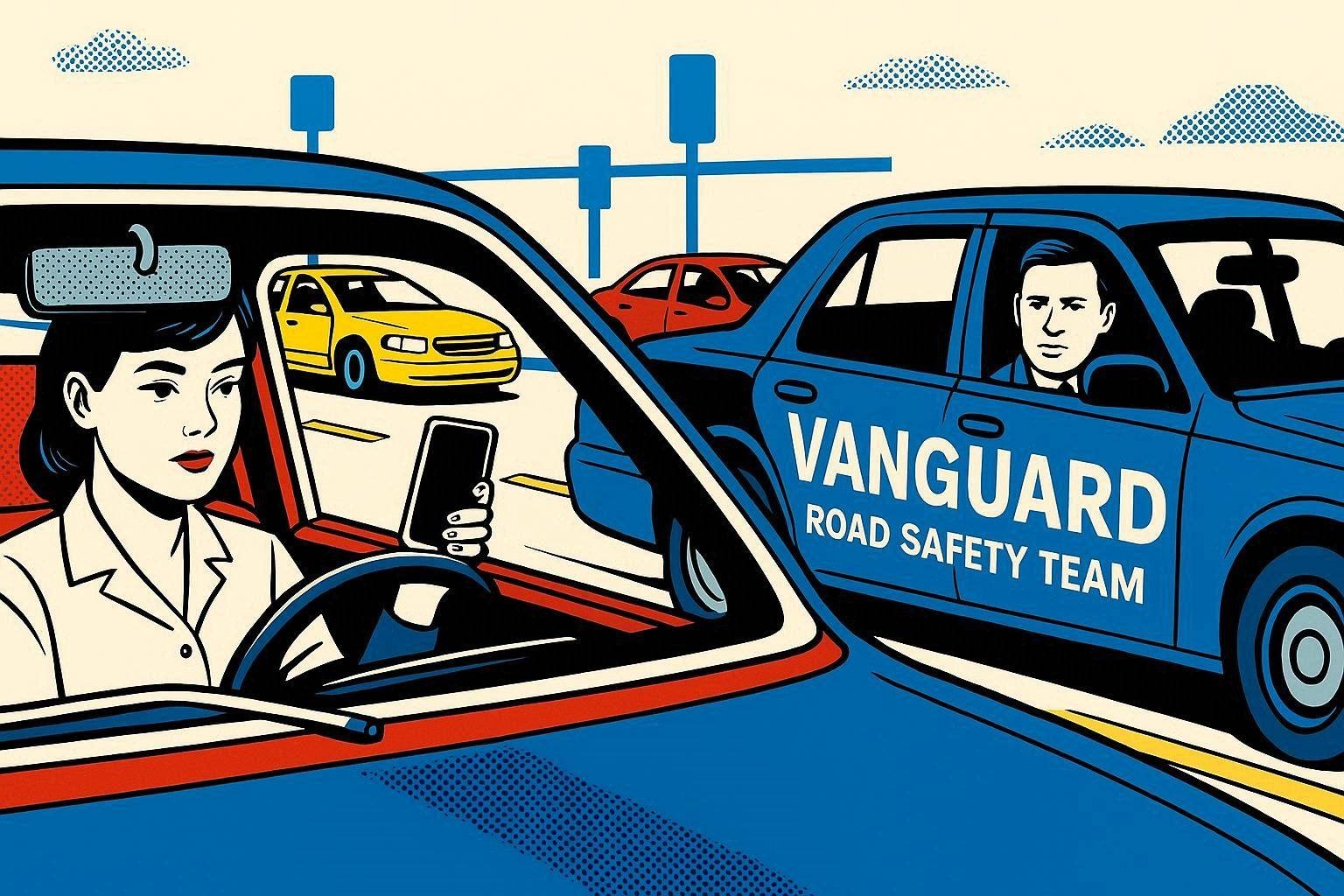
She was sitting in stationary traffic when an unmarked police vehicle pulled alongside her.
Moments later, she realised officers had seen the phone in her hand.
The incident offers a clear warning for UK motorists.
Being stuck in traffic does not usually make handheld phone use legal.
A brief mistake can also affect your licence, your finances and potentially your future Car Insurance.
The incident took place in Guildford, Surrey.
Footage shared by Surrey Roadsafe showed the woman using her phone behind the wheel.
However, she was not reportedly making a casual call.
Instead, she appeared to be paying a parking fine.
That detail makes the story memorable.
It does not make the phone use lawful.
At the time, her vehicle was sitting in stationary traffic.
She may therefore have believed that handling the device carried little risk.
Then an unmarked Vanguard Road Safety Team vehicle pulled alongside her.
The specialist unit operates within Surrey Police.
Officers could reportedly see the phone in her hand.
The woman then looked across and appeared to realise who was watching.
That was when the situation changed.
She was issued with a Traffic Offence Report.
The outcome was another £200 fine and six penalty points.
In other words, paying one penalty helped create a second, more serious problem.
A payment can wait. Six penalty points may follow you for years.
Why Stationary Traffic Still Counts As Driving
Here is the crucial point.
A car does not need to be moving for the handheld phone rules to apply.
Drivers can still commit an offence by using a mobile phone while waiting at traffic lights.
The same applies when queuing in congestion.
Therefore, saying “I was not moving” does not automatically provide a defence.
Many drivers misunderstand this rule.
They see a red light or traffic jam as a safe opportunity to check their screen.
After all, the wheels have stopped.
The journey, however, has not ended.
You remain responsible for the vehicle while waiting for traffic to move.
Your attention should stay on nearby cars, pedestrians, cyclists and changing road conditions.
A queue can also begin moving without warning.
That is why the safest rule remains simple.
Wait until you have parked properly before handling the phone.
What Counts As Handheld Phone Use?
This is where many motorists get caught out.
The offence is not limited to calls or text messages.
It can also cover:
- Opening an app
- Checking social media
- Taking photographs
- Choosing music
- Entering navigation details
- Making an online payment
Therefore, paying for parking is not automatically treated differently from using another app.
The purpose may feel sensible.
The method remains the problem.
One quick tap can easily become several.
Then a message appears.
Next, the driver looks down for longer than intended.
That is how a small distraction grows.
Are There Any Exceptions To Using A Mobile Phone While Driving?
Yes, but the exceptions are narrow.
Drivers may use a handheld phone to call 999 or 112 during a genuine emergency when stopping is unsafe.
Certain contactless payments may also be allowed while the vehicle remains stationary.
For example, this may apply at a drive-through or toll terminal.
However, it does not provide general permission to browse a parking app in traffic.
Remote parking functions can also fall within a specific exception.
Again, that does not allow unrelated phone use behind the wheel.
So, here is the safest approach.
Unless a clear exception applies, put the phone down until you have parked.
The standard penalty for illegal handheld phone use is £200 and six penalty points.
That is a serious punishment for a few seconds of distraction.
However, the fine may not be the largest long-term cost.
The points can remain relevant when drivers apply for future insurance.
They can also create immediate problems for newly qualified motorists.
Why Six Points Matter For New Drivers
Here is where the situation becomes even more serious.
Drivers who receive six points within two years of passing their test can have their licence revoked.
One mobile phone offence may therefore be enough.
The driver may need to apply for another provisional licence.
They may also need to retake both driving tests.
That means more lessons, more fees and more disruption.
For many young motorists, losing a licence can also affect work or education.
And then there is insurance.
New drivers already tend to face higher prices.
A mobile phone conviction can make finding cheap car insurance for young drivers even more difficult.
That is a considerable price for a task that could have waited.
How Can Penalty Points Affect Car Insurance?
Insurers consider driving convictions when calculating risk.
Therefore, six points may increase the price of your next policy.
The exact increase will vary.
Your age, vehicle, location and claims history will still matter.
Even so, some insurers may offer fewer options after a conviction.
Others may charge a higher premium or excess.
This is why drivers should never assume their renewal remains competitive.
Instead, compare several car insurance options before accepting a price.
The difference between insurers can become larger after penalty points.
And this matters.
The cheapest policy before a conviction may not remain the cheapest afterwards.
Do You Need To Tell Your Insurer?
Drivers should check their policy documents carefully.
Some insurers require notification during the policy term.
Others ask about convictions when the policy renews.
Either way, you must answer every question honestly.
Failing to disclose relevant information could create problems later.
For example, an insurer may investigate when you make a claim.
Incorrect details can also affect whether cover remains valid.
So, do not hide the offence to obtain a lower quote.
That is not genuine very cheap car insurance.
It is a risk that could become far more expensive.
Can You Still Find Cheaper Cover With Points?
Yes, although you may need to search more carefully.
Start by comparing quotes from several providers.
Next, check that every conviction detail is accurate.
Then review the parts of the policy you can control.
For example:
- Choose a car from a lower insurance group
- Review your annual mileage honestly
- Improve the vehicle’s security
- Avoid unnecessary optional extras
- Consider a higher voluntary excess you can genuinely afford
- Compare quotes before your renewal date
These steps will not erase the conviction.
However, they may help reduce the overall cost.
You can also read our guide to five ways to save money on car insurance.
The important thing is to compare like-for-like cover.
A lower price is not useful when the policy removes protection you actually need.
How Should Drivers Pay For Parking Safely?
The safest option is simple.
Park properly before using the phone.
Do not complete a payment while waiting at traffic lights.
Do not hold the device while sitting in congestion.
Instead, finish the payment before beginning the journey.
Alternatively, ask a passenger to use the app.
If necessary, pull over somewhere legal and safe.
A parking payment may feel urgent.
Usually, it can wait for a few minutes.
Six penalty points are much harder to undo.
Using A Mobile Phone While Driving: What Should Drivers Learn From This Case?
The Guildford incident highlights a common misunderstanding.
Stationary traffic does not normally make handheld phone use legal.
The reason for using the phone does not automatically matter either.
Paying a penalty may sound responsible.
Yet the driver still handled the device behind the wheel.
That single decision reportedly created another fine and six points.
It may also affect the cost of her future insurance.
Here is the real lesson.
A phone task can wait.
Your licence may depend on it.
Conclusion
The driver in Guildford reportedly tried to settle one penalty and received another.
Unfortunately, the second offence carried far more serious consequences.
A £200 fine hurts immediately.
Six penalty points can create problems for years.
They may threaten a new driver’s licence.
They may also make the cheapest car insurance harder to find.
So, resist the temptation to use your phone in stationary traffic.
Wait until you have parked safely.
Then make the payment, send the message or change the route.
A few minutes of patience could protect your licence and your wallet.
For related guidance, read our articles on:
mobile phone offences and losing your licence,