Car Insurance And Road Signs: ‘Red And Blue Cross’ Sign Every UK Driver Needs To Understand

Introduction

Car Insurance And Road Signs

Most drivers think they understand UK road signs reasonably well.

However, one incredibly common sign still causes massive confusion.

And unfortunately, getting it wrong could cost you far more than expected.

Because although the sign looks familiar, many motorists still misunderstand what it actually means.

That’s the dangerous part.

Especially now.

Because fines and penalty notices can quietly increase Car Insurance costs over time.

Meanwhile, drivers searching for Cheap Car Insurance or Very Cheap Car Insurance deals may suddenly face higher premiums after avoidable driving offences.

So, understanding this sign properly matters.

Probably more than you think.

Drivers comparing quotes through Cheap Car Insurance should pay especially close attention.

In This Article

  • What the red-and-blue cross sign really means
  • Why thousands of drivers misunderstand it
  • The difference between clearways and urban clearways
  • Why stopping briefly could still trigger fines
  • How driving penalties may affect Car Insurance
  • Why insurers monitor driving behaviour closely

Car Insurance And Road Signs: Why So Many Drivers Get This Sign Wrong

The UK Highway Code contains hundreds of road signs.

Naturally, confusion happens.

Especially when signs look almost identical.

And this particular sign causes problems constantly.

You have almost certainly seen it before.

Yet many drivers still cannot explain its meaning correctly.

That creates risk immediately.

Because drivers often rely on assumptions.

Unfortunately, assumptions behind the wheel become expensive very quickly.

According to the AA, many motorists admit they struggle with parts of the Highway Code.

Meanwhile, social media discussions regularly reveal confusion around common road signs.

Here’s the problem.

Confidence does not equal understanding.

And insurers care about outcomes.

Not intentions.

Therefore, even small mistakes may eventually affect Cheap Insurance UK prices.

Particularly for drivers already trying to secure the Cheapest car insurance possible.

Drivers researching Very Cheap Car Insurance often overlook how minor penalties influence future premiums.

However, insurers rarely ignore repeated offences.

What Does The Red-And-Blue Cross Sign Mean?

Very simply:

It means no stopping.

At all.

The sign indicates a clearway.

And unlike some parking restrictions, clearways usually operate continuously.

That means drivers cannot stop:

  • to answer a phone call
  • to check directions
  • to drop off passengers
  • to wait briefly
  • or to pick somebody up

Even short stops can trigger penalties.

That surprises many drivers.

Particularly because there are often no road markings nearby.

Instead, the sign itself carries the restriction.

“The red cross means no stopping, not even to pick up or set down passengers.”

That wording catches motorists out constantly.

Especially on unfamiliar roads.

Or busy routes entering cities.

And unfortunately, confusion becomes expensive quickly.

Because fines may eventually influence Car Insurance prices.

That matters enormously today.

Especially with Cheap Car Insurance becoming harder to find across the UK.

Drivers trying to Avoid Fines should understand clearway rules properly.

Because insurers increasingly analyse driving behaviour carefully.

Drivers Can Still Be Fined For “Stopping Briefly”

This is where many motorists get caught out.

They assume stopping means parking.

Legally, it does not.

Even pausing temporarily may break clearway rules.

For example:

  • checking sat nav directions
  • making a phone call
  • dropping somebody off
  • waiting inside the vehicle
  • stopping outside a shop

All of these may lead to enforcement action.

And many drivers genuinely do not realise it.

That confusion partly exists because UK road signs look very similar visually.

Some restrictions allow stopping during certain hours.

Others ban stopping completely.

So naturally, drivers become confused.

However, enforcement officers rarely accept confusion as an excuse.

That’s why understanding these signs matters so much.

Particularly for drivers trying to maintain lower Car Insurance costs.

Because insurers monitor driving history carefully.

And repeated offences increase perceived risk.

Drivers looking to Switch Car Insurance often discover that previous penalties continue affecting quotes for years.

That’s the frustrating reality.

Clearway Vs Urban Clearway: The Difference Many Drivers Miss

Now here’s where things become even more confusing.

A clearway and an urban clearway look extremely similar.

However, legally, they work differently.

And that distinction matters enormously.

A standard clearway normally bans stopping entirely.

Meanwhile, urban clearways often apply only during certain times.

Additional signs usually explain those restrictions.

Unfortunately, many drivers never notice the extra details.

Instead, they assume the rules are identical.

That mistake can become expensive fast.

Especially when cameras or enforcement officers are nearby.

Drivers frequently believe they stopped legally.

Yet legally, they may already be breaking the rules.

Consequently, fines arrive unexpectedly.

And unfortunately, repeated penalties may gradually increase Cheap Insurance UK prices.

That becomes particularly difficult for younger drivers already facing expensive premiums.

Drivers exploring Young Driver Insurance Tips should understand that avoiding unnecessary penalties remains one of the easiest ways to reduce long-term insurance costs.

How Road Sign Mistakes Could Affect Your Car Insurance

Many motorists separate road signs from insurance completely.

However, insurers do not think that way.

Every driving offence builds a picture.

And insurers study that picture carefully.

Here’s the catch.

Even smaller penalties may increase perceived risk.

Especially when offences begin stacking up.

Consequently, drivers may suddenly pay more for Car Insurance.

That becomes incredibly frustrating.

Particularly for motorists already hunting for the Cheapest car insurance deals available.

Because premiums across the UK remain stubbornly high.

Meanwhile, insurers increasingly use automated risk systems.

Those systems analyse:

  • driving history
  • previous claims
  • endorsements
  • convictions
  • penalty notices

And patterns matter enormously.

Drivers with repeated infringements often appear statistically riskier.

As a result, securing Very Cheap Car Insurance may become harder over time.

Drivers comparing policies through How Insurers Calculate Insurance Prices are often surprised by how many factors influence quotes.

And driving behaviour remains one of the biggest.

Why Clearways Exist In The First Place

Clearways exist for one simple reason.

Traffic flow.

Stopping vehicles creates danger quickly.

Particularly on busy roads.

Or fast-moving routes.

Or congested urban areas.

One stopped vehicle can suddenly trigger:

  • sharp braking
  • bottlenecks
  • lane changes
  • rear-end collisions
  • unnecessary congestion

Therefore, authorities use clearways to keep traffic moving safely.

Especially near city centres and high-traffic roads.

And although the rules sometimes feel strict, they exist to reduce risk overall.

That’s important to remember.

Because safer roads ultimately benefit everyone.

Including drivers searching for Cheap Car Insurance across the UK.

Drivers reading How 20mph Speed Limits Affect Drivers Across The UK will notice a similar pattern.

Road rules increasingly focus on reducing accidents and improving traffic safety.

Conclusion: Car Insurance And Road Signs

The red-and-blue cross sign may look simple.

However, misunderstanding it could become expensive surprisingly quickly.

Because clearway rules ban stopping completely.

Even briefly.

And unfortunately, many UK drivers still confuse clearways with urban clearways.

That confusion creates unnecessary fines.

Potential penalties.

And possibly higher Car Insurance costs later on.

So before your next journey, it may be worth refreshing your Highway Code knowledge properly.

Because avoiding even small driving mistakes could help protect your future premiums.

Especially if you are searching for Cheap Insurance UK deals or the Cheapest car insurance possible.

Drivers looking to lower long-term costs should also read:

What Will Invalidate Your Car Insurance

Car Insurance And Speed Cameras Explained, and

The Hidden Risks That Could Affect Your Insurance for more important driving insights.
Car Insurance: Why Tyre Safety Could Save Your Life (and Your Premium)

Introduction

Car Insurance Tyre Safety…

Most drivers never think twice about their tyres — until it’s too late.

A single worn tread or underinflated tyre could do more than cause a blowout.

It could invalidate your car insurance in an instant.

This month, during National Tyre Safety Month, drivers across the UK are being urged to “Check Your Tyres.”

The message is simple but powerful.

Your tyres don’t just carry your car — they carry your insurance cover, your safety, and your wallet.

A few minutes each month could save your life — and your car insurance.

Car Insurance Tyre Safety — The Hidden Connection

Here’s the truth.

Your tyres might seem minor, but to your insurer, they’re a major factor in determining risk.

When you take out a policy, you agree to keep your car in a roadworthy condition.

That includes your tyres.

If you’re involved in an accident and investigators find bald, damaged, or underinflated tyres, your claim could be denied.

Even worse, your policy could be cancelled entirely.

That means you’d not only pay for the repairs yourself, but you could also face penalties for driving uninsured.

And yes — even if the accident wasn’t your fault, illegal tyres can void your cover.

So before you hit the road, it’s worth asking:

Are your tyres protecting you, or putting everything at risk?

(Learn more about what can invalidate your policy in our guide: What Will Invalidate Your Car Insurance)

National Tyre Safety Month — Why It Matters

Every October, TyreSafe leads the national campaign to raise awareness about tyre safety.

Their message is urgent:

Check air pressure, condition, and tread depth at least once a month.

Because here’s the thing —

Neglecting your tyres isn’t just unsafe.

It’s expensive.

When your tyres are underinflated, your car works harder.

That means higher fuel costs, faster wear, and an increased chance of breakdowns.

And if that breakdown leads to an accident?

Your insurer could refuse your claim on the grounds of negligence.

Drivers who skip basic checks are often shocked to find that their Car Insurance doesn’t cover tyre-related incidents.

That’s why TyreSafe urges every motorist to make tyre checks part of their monthly routine.

It’s quick, simple, and — crucially — it could keep your cover valid.

(For more tips on managing your insurance costs, visit Navigating Car Insurance Costs)

What The Law Says About Tyres (and How It Affects Your Premium)

Let’s make this clear.

The UK law requires every tyre to have a minimum tread depth of 1.6mm across the central three-quarters of its width.

Anything less is illegal.

And that’s not just a slap on the wrist.

Drivers caught with illegal tyres face a £2,500 fine and three penalty points per tyre.

Four bald tyres could technically cost you £10,000 and 12 points — enough to lose your licence.

But the financial hit doesn’t stop there.

Because once you’ve been penalised, insurers flag you as high-risk.

That means your premiums skyrocket — even if you later replace the tyres.

And yes, those higher rates can last for years.

So staying compliant isn’t just about avoiding fines.

It’s about keeping your car insurance affordable in the long run.

(Find out how driving penalties affect premiums here: Drivers With 3 Penalty Points and Your Car Insurance)

Common Tyre Mistakes That Could Invalidate Your Cover

It’s not always neglect — sometimes, it’s just bad habits.

But here’s where many drivers go wrong:

  • Ignoring the tyre pressure light
  • Failing to check tread depth
  • Driving with mismatched tyres
  • Overloading their vehicles
  • Skipping professional wheel alignment

Each of these small errors can make your car unsafe.

And when an unsafe car causes an accident, insurers often call it driver negligence.

That’s the fine print many people miss — negligence can void your claim.

Think of it this way:

Would you insure a house if the owner refused to fix a leaking roof?

The same logic applies here.

Insurers expect responsible maintenance.

Fail that, and you could lose everything in one accident.

(Want to stay compliant? Read How to Protect Your Insurance)

How to Check Your Tyres Like A Pro: Car Insurance Tyre Safety

Checking your tyres doesn’t need to be complicated.

Here’s how to make it a habit that takes just minutes:

  1. Look for bulges or cuts.
    If you spot one, replace the tyre immediately.
  2. Measure tread depth.
    Use a 20p coin — if the outer band is visible, your tyre’s below the legal limit.
  3. Check pressure monthly.
    Your car’s recommended pressure is in the handbook, on the fuel cap, or the driver’s door sill.
  4. Notice steering pull?
    That’s a sign of wheel misalignment. Visit a garage before your tyres wear unevenly.

And don’t forget:

A quick visual check before every journey can prevent a breakdown or worse — a denied claim.

(More money-saving tips: 5 Ways to Save Money on Car Insurance)

Tyre Neglect And The Cost Of Accidents: Car Insurance Tyre Safety

Now let’s talk about the real cost — and it’s bigger than most drivers think.

Because when tyre maintenance slips, everything else unravels.

Not only can worn or damaged tyres make your car harder to control, but they can also directly impact your insurance cover.

For instance, when a crash investigation shows your tyres were below the legal tread limit, insurers often refuse to pay out.

That’s because, from their perspective, the incident was avoidable.

And when an accident could have been avoided, it’s officially classed as negligence.

As a result, the insurer might deny your claim, leaving you with thousands in repair bills.

Even worse, you could face legal action if someone else was injured.

Therefore, neglecting your tyres doesn’t just risk your car.

It risks your financial security, too.

Imagine losing your vehicle and your cover — all over something you could have prevented with a quick monthly check.

So before you start the engine next time, take a moment to look.

Because that tiny inspection could save your wallet, your licence, and possibly, your life.

(Read more about how accidents affect cover in Car Insurance and Modifications Explained)

Why Tyre Checks Are The Ultimate Driving Habit 

So, what’s the best approach moving forward?

The answer is simple — make tyre checks part of your normal driving rhythm.

Because when you treat safety like a habit, you dramatically reduce risk.

For example, if you check your tyres once a week, you’ll quickly spot tiny cracks, bulges, or drops in pressure before they turn serious.

As a result, you’ll avoid sudden blowouts, dangerous skids, or last-minute MOT failures.

Even more importantly, regular tyre checks keep you compliant with the terms of your car insurance policy.

Most insurers assume you’re maintaining your car responsibly.

So, by proving that you do, you strengthen your position if you ever need to file a claim.

Additionally, those routine checks can help identify misalignment or uneven wear — both of which can shorten tyre life and reduce fuel economy.

Therefore, a few minutes of prevention each month can lead to years of savings.

It’s a small habit with a massive payoff.

(Find out more about policy types at Car Insurance Options)

Conclusion

Drive Safe.

Stay Covered.

At the end of the day, tyre safety isn’t a minor detail — it’s a major pillar of responsible driving.

Because when your tyres are healthy, everything else falls into place.

You drive safer.

You spend less.

And you protect your insurance from invalidation.

Ultimately, it all comes down to one idea: maintenance equals protection.

So next time you’re tempted to skip a check, remember how much is at stake.

Your tyres don’t just connect you to the road — they connect you to your insurer, too.

Furthermore, taking proactive care helps you avoid the penalties, higher premiums, and claim denials that come from tyre neglect.

In short, staying alert means staying insured.

As TyreSafe puts it:

“A five-minute check could save your life.”

And it could also save your Cheap Car Insurance.

(For further guidance on managing costs, see Navigating Car Insurance Costs)

If you found this useful, these resources will help you go even further:


Should The UK Introduce A Maximum Driving Age?

Introduction

The debate over whether the UK should introduce a maximum driving age has divided motorists, politicians, and insurers alike.

While millions of older drivers remain safe behind the wheel, campaigners argue that age-related health issues could pose new risks.

So what’s really at stake here?

If you want a quick primer on cover types, see Comprehensive vs Third Party.

The UK’s Current Rules On Older Drivers: Maximum Driving Age

Let’s start with the facts.

The UK has no official maximum driving age.

That’s right — there is currently no legal cut-off that forces drivers to hand over their licences at a certain age.

Instead, motorists must renew their licence at 70.

From there, renewal happens every three years.

But here’s the catch.

It relies heavily on drivers self-reporting health changes.

So what does this mean for insurance?

It means that insurers have to calculate risk without strict age-based limits.

Naturally, this can push up premiums for elderly drivers.

If you want to explore your options, take a look at Car Insurance Options.

And if you’re wondering how new rules could affect you, here’s a guide on Navigating New Rules for Drivers Over 70.

Calls For A Maximum Driving Age

So, should we have a cut-off?

Experts argue yes.

Some suggest a maximum age limit in the 80s.

Why?

Because health can deteriorate quickly.

Reaction times slow.

Eyesight weakens.

And insurers know this all too well.

If road safety becomes harder to guarantee, insurance prices rise.

But here’s the interesting part.

Finding the cheapest car insurance doesn’t just depend on age.

It also depends on how insurers view risk collectively.

Which raises another question.

Would banning drivers beyond 80 really lower costs for everyone else?

It’s a debate far from settled.

Want to find out how insurers currently manage age-based premiums?

Check out Very Cheap Car Insurance.

You can also compare how older drivers fare with Navigating Cheap Car Insurance For Seniors – UK Drivers Over 70.

Labour’s Road Regulation Review On Maximum Driving Age

Now, let’s talk politics.

Labour has been examining road safety regulations.

They’re not pushing for a maximum driving age — at least not yet.

Instead, they’re considering compulsory eyesight checks for over-70s.

This sounds sensible, right?

But here’s where it gets complicated.

Campaigners argue that this doesn’t go far enough.

If fitness to drive is left too flexible, insurance companies still face higher uncertainty.

And uncertainty means higher prices.

For some motorists, especially older women who statistically drive fewer miles, the impact could be huge.

To see how this plays out in real terms, take a look at Cheap Car Insurance for Women.

Plus, keep in mind that your medical status could affect your policy — see What Medical Conditions Affect Car Insurance.

What The Public Thinks

Public opinion is split.

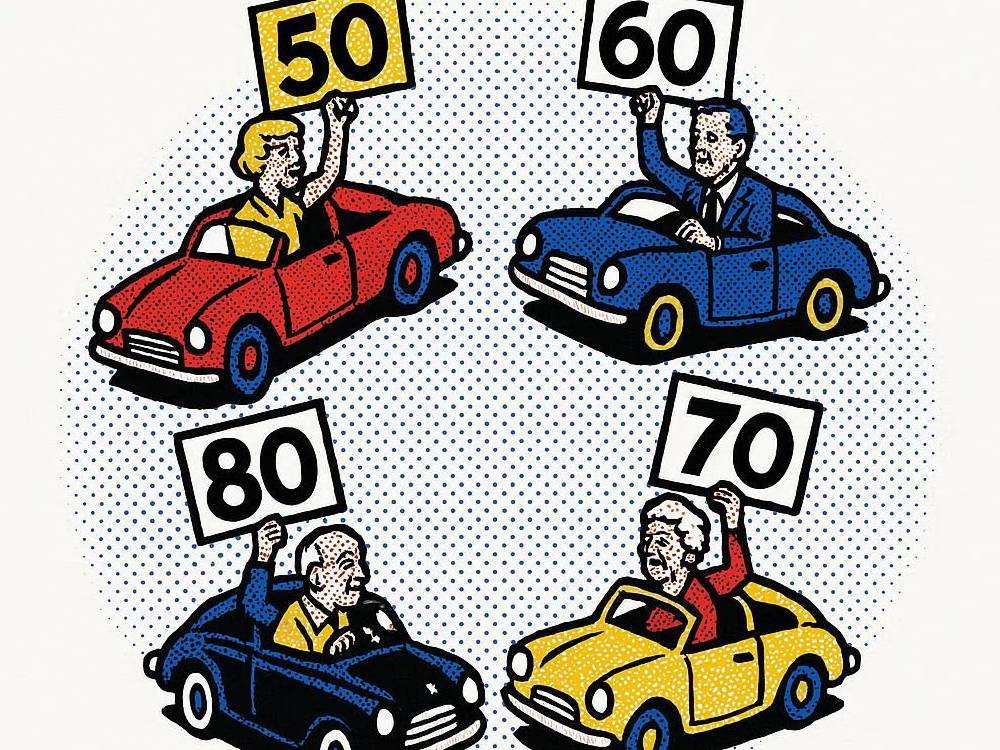
A poll of 2,000 drivers revealed that 36% want a maximum driving age.

That’s more than one in three.

But here’s where things get interesting.

11% said the cut-off should be 70.

8% said it should be 60.

And 5% believe the maximum age should be just 50.

That’s shockingly young, right?

Clearly, drivers are divided between safety and independence.

And this split mirrors the insurance market.

The more the public supports restrictions, the more likely insurers will prepare for change.

If you want to keep your policy affordable, don’t miss these 5 Ways to Save Money.

Realities Of Driving In Your 70s, 80s, And Beyond

But here’s the other side.

Millions of older drivers are still safe.

In 2020, around 5.6 million drivers over 70 were still on the road.

Many were confident, capable, and experienced.

And get this.

Some even continue driving into their 90s.

That’s right — your ability to drive doesn’t vanish with age.

Instead, it depends on health, awareness, and honesty.

This is where modern solutions like telematics come in.

By monitoring driving behaviour directly, insurers can separate safe older drivers from risky ones.

This means cheaper premiums for those who prove their skill.

Want to know how it works?

Here’s a guide on Telematics Car Insurance.

You should also explore how Your Credit Score plays a surprising role in your premiums.


How A Maximum Driving Age Would Impact Car Insurance

So what happens if a maximum age is introduced?

The impact on car insurance would be significant.

First, insurers would immediately adjust their pricing models.

However, this wouldn’t just affect older drivers.

Instead, the entire risk pool would shift.

Older drivers — already facing higher premiums — might be excluded entirely.

As a result, younger motorists could unexpectedly see costs rise.

Why?

Because insurers spread financial risk across all age groups.

Remove one group, and the balance breaks.

Therefore, the cheapest car insurance might become harder to secure.

On the other hand, safety improvements could push some premiums down.

It all depends on how regulators and insurers respond.

If you want to understand the maths behind premiums, see How Do Insurance Companies Calculate Car Insurance?.

In addition, you may find Temporary Car Insurance a useful option for short-term flexibility.

Balancing Safety, Freedom, And Affordability

So how do we strike the right balance?

On one hand, road safety must come first.

On the other hand, independence matters deeply for elderly people, especially those in rural communities.

Without a licence, they risk losing access to healthcare, family, and even daily essentials.

Therefore, the debate cannot be solved with one blunt rule.

Instead, experts suggest regular health checks and telematics solutions.

These tools allow safe older drivers to prove their competence.

If your circumstances change, remember that Switching Car Insurance could deliver immediate savings.

The Future Of Driving And Insurance In The UK

Looking ahead, the debate is only going to intensify.

Electric vehicles are becoming more common.

At the same time, self-driving technology is developing quickly.

As a result, insurers will need to adapt once again.

For elderly drivers, this shift could actually provide new opportunities.

In fact, advanced assistance systems may help compensate for slower reflexes.

Meanwhile, the rise of autonomous driving could reduce the need for licence restrictions altogether.

However, until these innovations become mainstream, the conversation about a maximum driving age will continue.

Therefore, the best move today is to stay informed.

Compare policies regularly.

And always search for the cheapest car insurance UK that fits your needs.

If you’re considering the switch to electric, see Car Insurance for Electric Vehicles.

Conclusion

So where does this leave us?

Currently, the UK has no maximum driving age.

However, public support and political debate suggest that changes could arrive sooner than many expect.

If a cut-off age is introduced, insurance costs will undoubtedly shift.

Older motorists could be excluded from cover.

Meanwhile, younger drivers might face higher premiums.

Therefore, the smartest strategy is to plan ahead.

By comparing policies, switching when necessary, and embracing new technology, you can still secure the cheapest car insurance.

For peace of mind, start with Cheap Car Insurance UK.


Want to explore more insights?

Here are some related guides worth reading:

Urgent Reform Demanded: The Grey Areas Of Car Insurance Exposed

Introduction

Reform demanded.

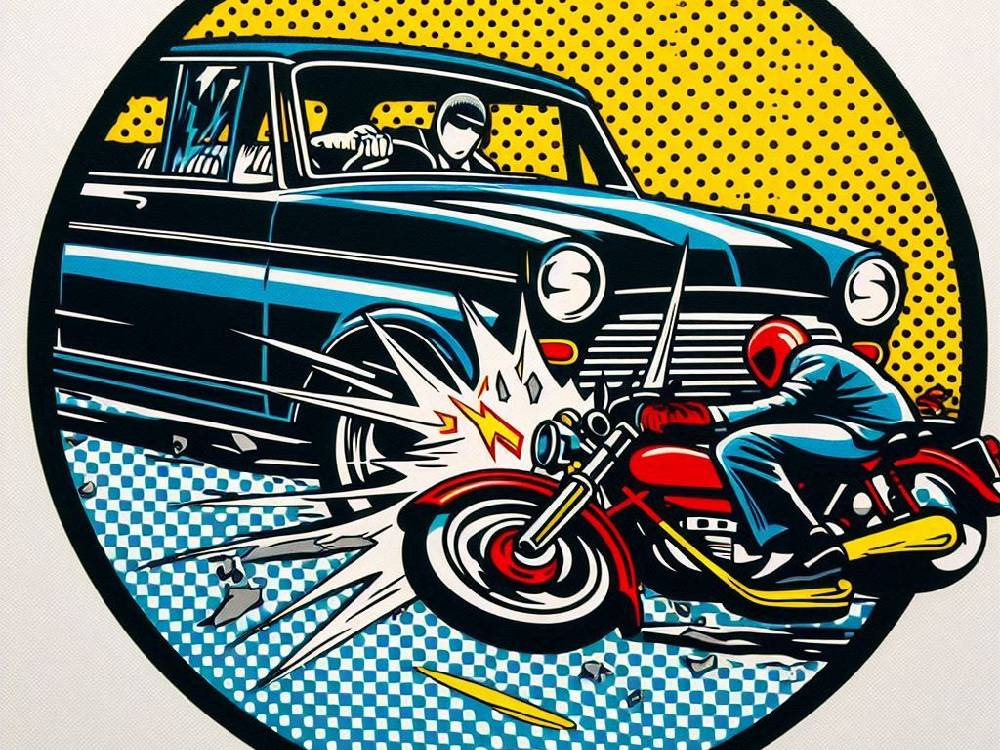
On a cold December evening in 2023, a devastating incident occurred.

This event would later spark a nationwide debate on car insurance laws in the UK.

Tragically, Cameron Arneaud, a 20-year-old motorcyclist from Bedford, lost his life.

The collision occurred in Finedon, Northamptonshire.

The driver involved had overstayed his student visa, thereby invalidating his driving licence and insurance.

Yet, he was still allowed on the roads, a loophole that Cameron’s father, Daniel Arneaud, is fervently working to close.

This article delves into the complex interplay of immigration, licensing, and insurance laws.

It contributed to this tragedy.

And there’s more.

It also explores ongoing efforts to reform these “grey areas” to prevent future losses.

  • Incident Overview: Cameron Arneaud’s fatal accident and its circumstances.
  • Legal and Insurance Loopholes: How the driver’s invalidated status went unchecked.
  • Advocacy for Change: Daniel Arneaud’s campaign for tighter insurance scrutiny.
  • Community and Political Engagement: The mobilization of local and national support for reform.

The Tragic Incident And Its Aftermath

On December 22, 2023, Cameron Arneaud’s life was cut short.

His motorcycle collided with a car driven by Syed Bukhari.

Bukhari was a 27-year-old whose legal right to drive in the UK had lapsed along with his visa.

But wait—there’s more.

Despite this, Bukhari’s car insurance was ostensibly valid.

This is a stark indication of the inadequate checks performed by insurance companies.

Daniel Arneaud, devastated by his loss, points to this as a glaring oversight.

It needs immediate address.

In the UK, a resident can drive on a non-UK licence for up to 12 months.

After which, they must obtain a UK licence.

However, insurance companies currently lack the means—or perhaps the mandate—to verify the immigration status of a policyholder.

They rely instead on the honesty of the applicant.

This gap in the verification process allowed Bukhari to maintain insurance on a technicality.

Despite his ineligible status.

Daniel Arneaud’s Call For Stricter Regulations

Fueled by his grief and a strong sense of injustice, Daniel has been vocal in his demand for reform.

He argues that insurance companies should bear some responsibility.

They should ensure their policyholders are legally permitted to drive.

“If insurers had properly checked, Mr Bukhari wouldn’t have been insured.

Therefore, he would not have been on the road, and my son would still be alive,” he asserts.

But that’s not all.

Reform: The Challenge Of Enforcing New Insurance Policies

Changing insurance verification laws involves navigating a complex web of privacy laws.

This includes data protection regulations and the technical limitations of current systems.

Insurance experts and policymakers are thus caught in a debate.

It’s over feasibility and privacy concerns versus the undeniable need for improved public safety.

Public And Political Momentum For Reform

The outcry following Cameron’s death has galvanized public support for the Arneaud family’s campaign.

With the assistance of North Bedfordshire MP Richard Fuller, Daniel is pushing for legislative changes.

These changes would close these dangerous loopholes.

Organisers are preparing to launch an online petition.

It aims to gather public support and bring further attention to this critical issue.

Here’s the kicker:

This narrative not only highlights the human aspect of the tragedy.

It also frames the discussion around the need for legislative reform.

It draws readers into a conversation that impacts every UK driver’s life and safety.

Learn more about how car insurance is calculated and the factors that influence your premium.

The best time to buy car insurance.

Insights From The Insurance Sector

Firstly, the Association of British Insurers acknowledges their current lack of access to individual immigration statuses.

This responsibility falls to the Home Office.

Consequently, they stress the critical importance of policyholders informing insurers immediately upon any changes.

Failure to do so can invalidate the policy.

Moreover, driving uninsured can lead to severe legal consequences if involved in an accident.

Furthermore, the Department for Transport confirms the dangers of driving without a valid licence and insurance.

They emphasise that police possess robust powers to arrest illegal drivers.

Consequently, those apprehended face the full force of the law, including potential jail time.

This clearly underscores the government’s strong commitment to road safety.

Plans For Future Policy Adjustments/Reform

Additionally, Daniel Arneaud and his supporters, including local MPs, are diligently proposing legislative changes.

These changes aim to require more thorough checks by insurance companies.

Here’s the crucial point:

This initiative seeks to close loopholes that allow illegal drivers to remain unchecked, significantly enhancing road safety.

Conclusion

In conclusion, the tragic loss of Cameron Arneaud has ignited a crucial campaign for reforming car insurance verification processes in the UK.

Daniel Arneaud’s relentless advocacy aims to transform his grief into a powerful force for legislative change.

By actively advocating for stricter regulations on insurance verification, the campaign aims to significantly improve road safety.

It ensures all drivers comply with legal standards.

Importantly, this campaign gives a voice not only to Cameron but to every driver sharing the road.

It serves as a call to action for everyone to support these changes.

These reforms promise to make UK roads safer for everyone.

Learn more about the impact of car insurance policies on road safety.

Get involved in road safety initiatives and help drive change.

Car Insurance Quote

Step 1

Complete your quick and easy quote

Car Insurance

Step 2

Reveal your car insurance policies

Cheapest

Step 3

Pick your favourite and get instant cover