Introduction
Middle lane hogging…
Few motorway habits cause more frustration than a driver sitting unnecessarily in the middle lane.
You may approach safely from behind while travelling in the left lane.
Then comes the dilemma.
Should you cross two lanes to overtake them?
Or should you continue forward and pass on their left?
The second option may feel justified.
However, an unsafe undertaking manoeuvre could result in a fine, penalty points and higher Car Insurance costs.
This guide explains:
- What middle lane hogging means
- Why it disrupts motorway traffic
- Whether undertaking is illegal
- What penalties drivers could face
- How penalty points may affect Cheap Car Insurance
- How to respond safely without making the situation worse
Another driver may cause the frustration, but your reaction could leave you paying for it.
What Is Middle Lane Hogging?
Middle lane hogging happens when a driver remains in the middle lane without overtaking another vehicle.
Drivers should normally use the left lane when the road ahead remains clear.
The middle and outside lanes allow motorists to pass slower traffic.
After completing an overtake, drivers should return to the left when it becomes safe.
Simple enough.
Yet motorists ignore or misunderstand this rule every day.
Some drivers believe the middle lane feels safer.
Others avoid moving left because they expect to meet another slower vehicle eventually.
Meanwhile, distracted drivers may simply stop noticing that the left lane has become empty.
Whatever the reason, unnecessary middle lane driving can obstruct traffic and provoke risky reactions.
Drivers comparing car insurance options should remember that motoring offences can narrow their choices later.
Can Middle Lane Hoggers Receive Penalty Points?
Yes.
Police may treat persistent middle lane hogging as careless or inconsiderate driving.
A less serious offence could result in a fixed penalty and three licence points.
More serious cases may proceed to court.
Therefore, middle lane hogging is not merely irritating.
It can become a motoring offence.
But here is where things get complicated.
The driver attempting to pass the lane hogger could also land in trouble.
Why Does Middle Lane Hogging Cause Congestion?
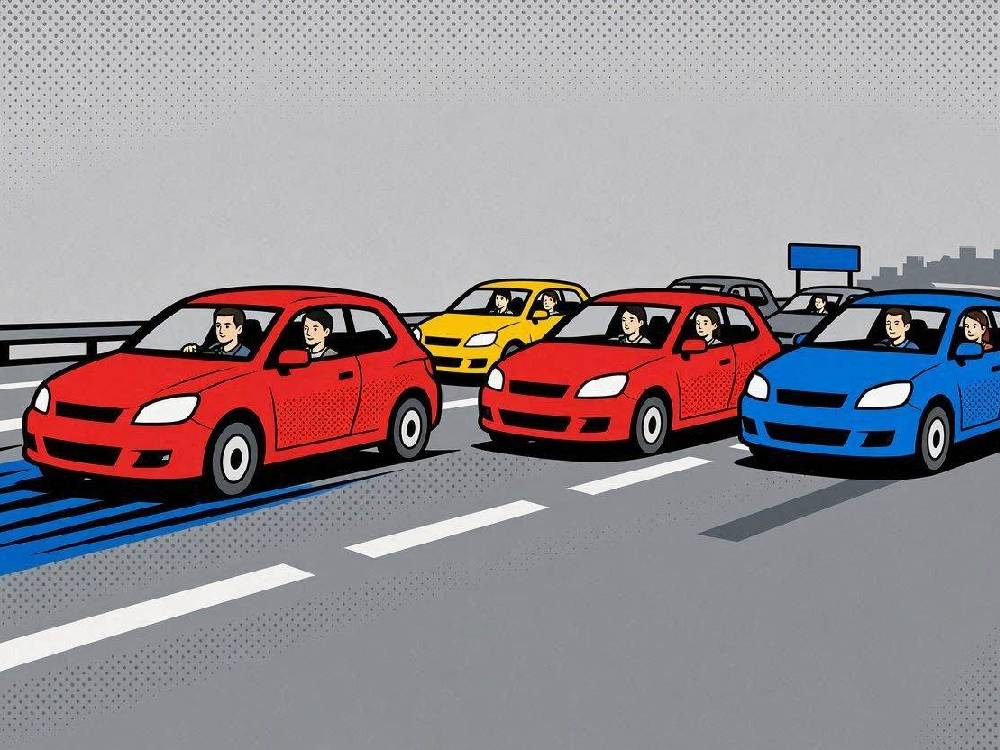
A middle lane hogger can make a three-lane motorway function more like a two-lane road.
Imagine that you are travelling in the left lane.
A slower vehicle sits ahead in the middle lane, despite the inside lane remaining clear.
To overtake conventionally, you must move into the middle lane.
Then you must move again into the outside lane.
After passing, you complete the same journey back towards the left.
One poorly positioned vehicle has forced several unnecessary lane changes.
And that changes everything.
Every lane change requires observation, signalling, judgement, and sufficient space.
Consequently, unnecessary lane changes create more opportunities for hesitation, blind-spot mistakes, and sudden braking.
Traffic also begins to bunch behind slower vehicles.
Meanwhile, faster motorists crowd into the outside lane.
As a result, the motorway carries traffic less efficiently.
The problem does not end there.
Middle lane hogging regularly provokes anger and impatience.
Drivers may begin tailgating.
Others flash their headlights or repeatedly sound the horn.
Some motorists accelerate beyond the speed limit.
Others remain in the left lane and undertake.
Unfortunately, a few seconds of frustration can create financial consequences lasting several years.
That can make finding very cheap car insurance considerably harder.
Is Undertaking A Middle Lane Hogger Illegal?
Many motorists assume that passing any vehicle on the left automatically counts as an illegal undertaking.
The reality carries more nuance.
The Highway Code advises drivers not to overtake on the left.
It also warns motorists against moving left specifically to pass another vehicle.
Therefore, deliberately changing into the inside lane, accelerating past, and moving right again could be viewed as careless driving.
Here is the crucial distinction.
During congestion, different lanes often travel at slightly different speeds.
In slow-moving queues, motorists may remain in their lane when it moves faster than traffic on the right.
Keeping pace with congested traffic differs from deliberately changing lanes to undertake.
Speed matters.
Road conditions matter.
Your distance from other vehicles matters too.
Above all, police will consider whether the manoeuvre created unnecessary danger.
What If You Are Already In The Left Lane?
This situation causes the greatest confusion.
You may already be travelling correctly in the left lane when you approach a slower middle lane driver.
May not have moved left to undertake them.
You are simply catching up.
So, what should you actually do?
Continuing past at motorway speed may still carry legal risk outside congested conditions.
The safest response usually involves completing a conventional overtake on the right.
Check your mirrors.
Assess the traffic around you.
Then move across one lane at a time when suitable gaps appear.
After passing, return to the left when it becomes safe.
Yes, this can feel unfair.
You are following the rules while the middle lane hogger is not.
Nevertheless, another driver’s mistake does not excuse careless driving.
Two wrongs will not protect your licence.
What Penalties Could Undertaking Carry?
Undertaking does not attract one automatic penalty in every situation.
Instead, the consequences depend on the manner of driving.
Police may deal with an unsafe pass as careless or inconsiderate driving.
A less serious offence could bring a £100 fine and three penalty points.
However, aggressive lane changes, excessive speed, or dangerous passing may lead to court proceedings and heavier penalties.
This is the part many drivers overlook.
Penalty points may also increase future insurance premiums.
Insurers consider motoring convictions when assessing the likelihood of a future claim.
Consequently, drivers with points may receive fewer competitive quotations.
They may also struggle to secure the cheapest car insurance available before the offence.
That makes one impatient decision surprisingly expensive.
Drivers should always disclose relevant convictions when comparing cheap car insurance.
Failing to answer an insurer’s questions accurately could create serious problems during a later claim.
Motorists facing a higher renewal price can also explore five ways to save money on car insurance.
However, prevention remains cheaper than repairing the damage afterwards.
And the financial impact may last much longer than the original journey.
A conviction could influence several renewals before it stops affecting quotations.
Therefore, staying calm may protect both your licence and your bank balance.
Drivers unhappy with their renewal price should compare alternatives before they switch car insurance.
How Should You Respond To A Middle Lane Hogger?
The safest response is simple.
Stay calm and complete a conventional overtake on the right when traffic conditions allow.
Check your mirrors carefully.
Signal before changing lanes.
Then move across one lane at a time, rather than cutting sharply through traffic.
Once you have passed the slower vehicle, return to the left when it becomes safe.
Here is what matters most.
Another driver’s poor lane discipline does not excuse dangerous behaviour from you.
Avoid tailgating, speeding, or repeatedly flashing your headlights.
Likewise, never brake-check another vehicle or use the hard shoulder to pass.
These reactions can quickly turn a frustrating situation into a serious collision.
They may also leave you facing penalty points, a fine, or an insurance claim.
Could Points Increase Your Car Insurance?
Penalty points can affect the price of Car Insurance because insurers use driving history when assessing risk.
However, the increase will vary between providers.
Some insurers may charge more.
Others may apply a larger excess or offer fewer policy options.
Therefore, comparing quotations becomes especially important after a motoring conviction.
Always answer questions about points and convictions honestly.
Providing incomplete information may produce a cheaper initial quotation, but it could cause problems during a later claim.
Cheap today can become expensive tomorrow.
Drivers looking for alternative cover may want to explore telematics car insurance.
A telematics policy may reward careful driving, although savings are never guaranteed.
You should also compare the actual cover provided, rather than choosing the lowest number on the screen.
Our guide to comprehensive versus third-party insurance explains the main differences.
Conclusion
Middle lane hogging is frustrating because it disrupts traffic and forces other motorists to make unnecessary lane changes.
However, undertaking aggressively may create an even greater problem.
A moment of impatience could lead to points, a fine, and higher Car Insurance premiums.
Do not let a few seconds of frustration become years of extra expense.
Keep a safe distance.
Overtake on the right when conditions allow.
Then return to the left once you have safely passed.
The middle lane hogger may be driving badly.
Nevertheless, protecting your licence, your passengers, and your ability to find Cheap Car Insurance matters far more than proving a point.